Pelvic Organ Prolapse
There are several kinds of prolapse of the pelvic organs, and it is also possible that you may have more than one kind of prolapse. The image to the right shows a normal pelvis with no prolapse.

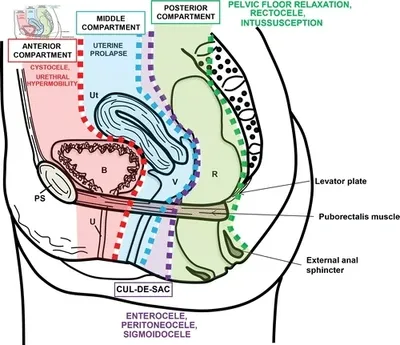
Prolapse is caused by a weakness in the surrounding support tissue, similar to hernias in other parts of the body. The type of prolapse is named according to the organ that has lost its support and falls or prolapses into the vaginal space.
It is helpful to think of the vagina as a box, with a front (anterior) wall, a back (posterior) wall and a roof (cervix). The walls and roof should be strong, like thick cardboard, and keep their position even when there is pressure put against them. If they have weakened, like wet cardboard, they easily lose their shape and give in to surrounding pressure.
There are several ways in which the walls become weak and cause a prolapse:
- Rectocele, where the rectum falls forward into the back (posterior) wall of the vagina, often causing a bulge
- Cystocele, where the bladder falls backwards into the front (anterior) wall of the vagina
- Enterocele, where the peritoneum or small bowel prolapses into the vaginal wall
- Uterine prolapse, or procidentia, where the uterus prolapses down into the vagina
- Triple organ prolapse, where all areas of supporting tissue have weakened, causing the front, back and top of the vagina to collapse inwards
Risk Factors for Prolapse
Factors that increase your risk of developing pelvic organ prolapse include:
- Pregnancy and childbirth. Vaginal delivery of one or more children contributes to the weakening of your pelvic floor support structures, increasing your risk of prolapse. The more pregnancies you have, the greater your risk of developing any type of pelvic organ prolapse. Women who have only cesarean deliveries are less likely to develop prolapse.
- Age. Small bowel prolapse and other types of pelvic organ prolapse occur more often with increasing age. As you get older, you tend to lose muscle mass and muscle strength — in your pelvic muscles as well as other muscles.
- Pelvic surgery. Removal of your uterus (hysterectomy) or surgical procedures to treat incontinence may increase your risk of developing small bowel prolapse.
- Increased abdominal pressure. Being overweight increases pressure inside your abdomen, which increases your risk of developing small bowel prolapse. Other factors that increase pressure include ongoing (chronic) cough and straining during bowel movements.
- Smoking. Smoking is associated with developing prolapse because smokers frequently cough, increasing abdominal pressure.
- Race. For unknown reasons, Hispanic and white women are at higher risk of developing pelvic organ prolapse.
- Connective tissue disorders. You may be genetically prone to prolapse due to weaker connective tissues in your pelvic area, making you naturally more susceptible to small bowel prolapse and other types of pelvic organ prolapse.
Prevention
You may be able to lower your chances of pelvic organ prolapse with these strategies:
- Maintain a healthy weight. If you’re overweight, losing some weight can decrease the pressure inside your abdomen.
- Prevent constipation. Eat high-fiber foods, drink plenty of fluids and exercise regularly to help prevent having to strain during bowel movements.
- Treat a chronic cough. Constant coughing increases abdominal pressure. See your doctor to ask about treatment if you have an ongoing (chronic) cough.
- Quit smoking. Smoking contributes to chronic coughing.
- Avoid heavy lifting. Lifting heavy objects increases abdominal pressure.